






Updated: 21 Jan 2026
5 Key Malaysian Business Licenses For Singaporean Entrepreneurs
When entrepreneurs and businesses in Singapore want to expand into Malaysia, setting up a foreign owned company takes a week at most with minimal requirements.
However, you can’t do business until you’ve applied for the necessary business licenses.
And depending on activity and industry, licenses can impose additional conditions and application periods that add significantly to total costs.
To help you plan, below are five most commonly required licenses needed by foreign ventures in Malaysia, broken down into:
-
types of businesses that need them
-
regulatory body
-
key requirements
-
government fees, and
-
processing time estimates
To keep our list general, we’ve avoided niche-specific licenses (obviously if you want to open a tuition centre, you’ll need an education license).
We’ve also kept each entry brief and ended with links to full guides by our partners in Malaysia.
Let’s begin.
Composite License
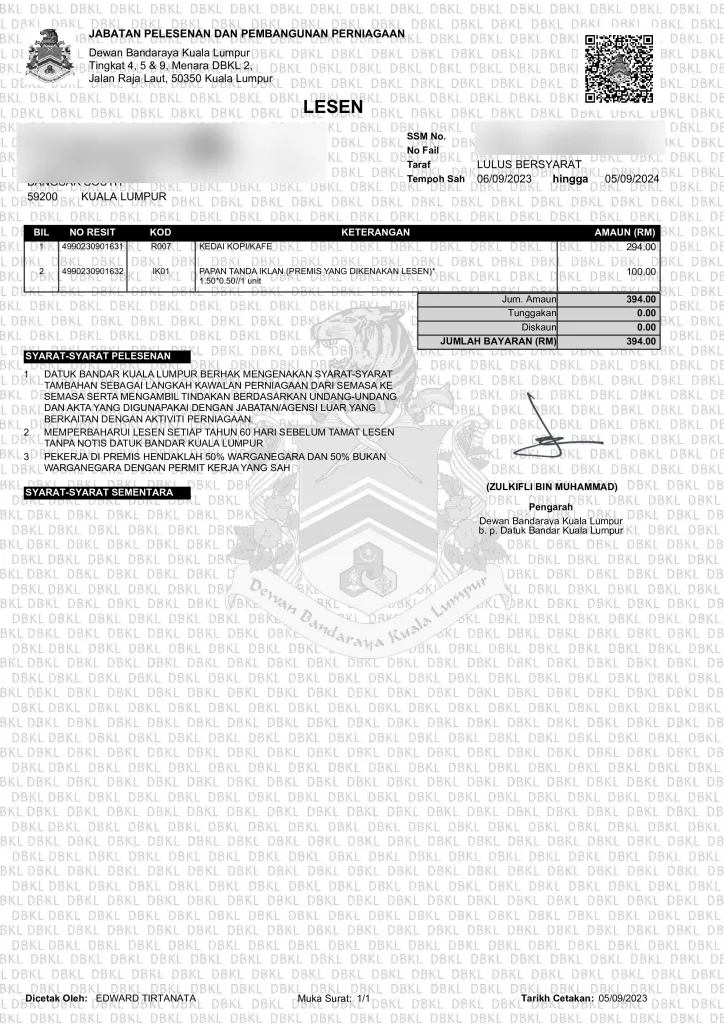
Sample DBKL composite license.
Government fee: Up to RM500 for retail and RM1,000 for industrial outlets
Time estimate: Instant - 3 months depending on location
This is a combined premise and signboard permit to operate from physical premises, issued by the district-level Local Council (known as Pihak Berkuasa Tempatan / PBT) where your premises are located.
The key requirement is to first secure suitable premises as a signed tenancy agreement is one of the required supporting documents.
For details see these guides to business licenses in two top spots for Singaporean businesses:
-
Kuala Lumpur: Guide to DBKL business licenses
-
Johor Bahru: Guide to MBJB business licenses
Almost all other licenses require a composite license to apply, making this your top priority.
Other PBT Licenses
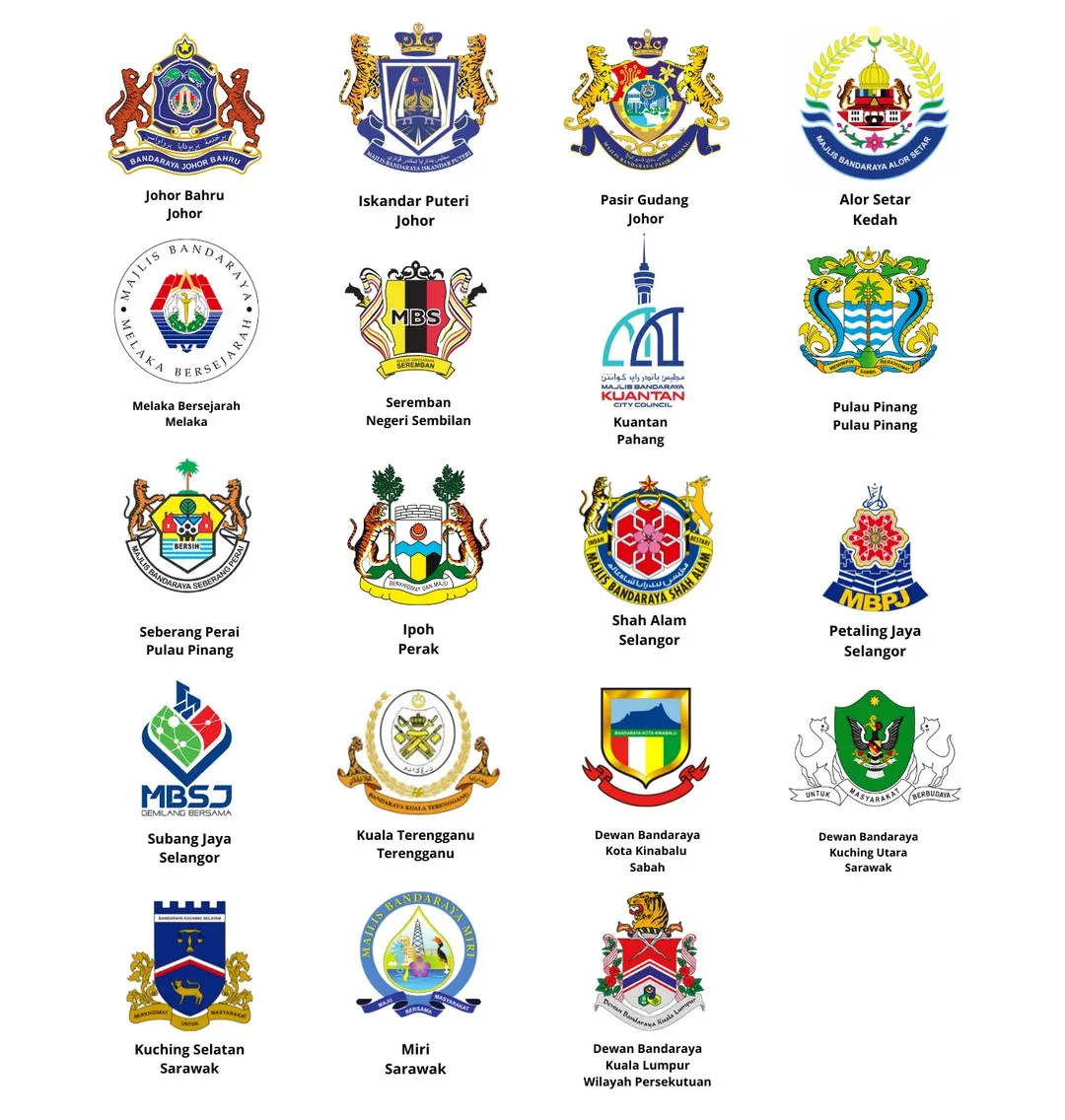
A snapshot of Malaysia’s many PBTs.
Government fee & time estimate: Too much variation!
In addition to premise and signboard licenses, PBTs are responsible for issuing other commonly required business licenses including:
-
licenses for other forms of advertising such as banners and buntings
-
premise renovation permits for any additional partitions or modifications
-
entertainment licenses for pubs, cinemas, and karaoke centres
-
alcohol licenses to sell alcohol for on-premise / off-premise consumption
-
car park reservations for business use
If you plan accordingly, you can apply for many of these licenses together with your composite license or immediately after, minimising downtime.
Check out this FAQ on PBT licenses in Malaysia for more details.
WRT / USS License
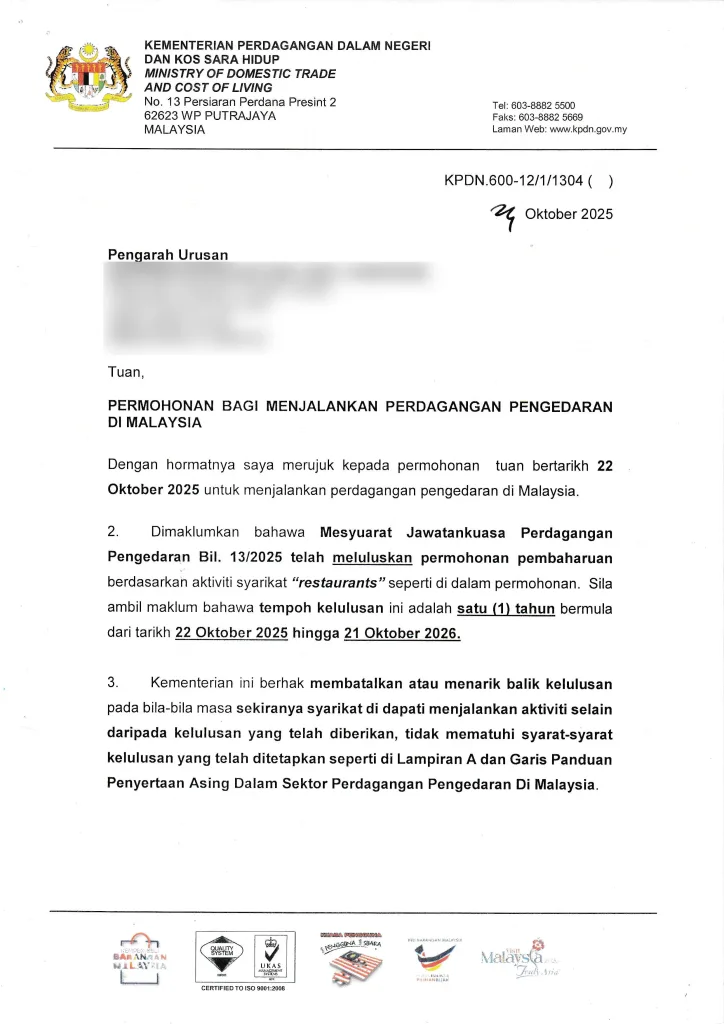
Sample WRT license.
Government fee: None
Time estimate: 2 - 3 months
Wholesale, Retail, and Trade (WRT) licenses are required for any foreign company in Malaysia (at least 51% foreign ownership) selling products to local individuals or businesses.
Alternatively, if the foreign business provides a service to local buyers, it requires an Unregulated Services Sector (USS) license.
Both are issued by the Malaysian Ministry of Domestic Trade (KPDN) and carry a RM1,000,000 paid up capital requirement.
Yes, you read that right, and for details, read this full guide to WRT licenses.
Foreign CIDB Contractor Certificate
Government fee: One-off RM50 application + RM5,000 registration fee / project
Time estimate: 2 - 3 months
Foreign companies that want to get involved in any aspect of building works in Malaysia must register with the Malaysian Construction Industry Development Board (CIDB) and obtain a foreign contractor certificate.
While this obviously applies to contractors, it also extends to:
-
electrical engineering
-
interior design
-
plumbing
-
architecture design
-
material manufacturer and supplies
If your business will likely be involved, note that CIDB sets very specific personnel and document requirements, laid out in this guide to foreign CIDB registrations.
MIDA / MITI Manufacturing License
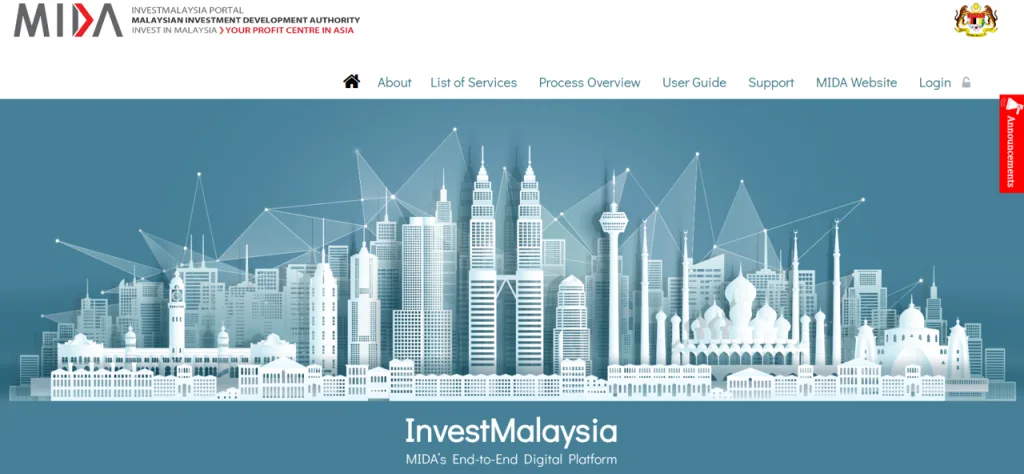
Government fee: RM2,000 - RM2,500 depending on full license or exemption
Time estimate: 6 – 8 weeks
Singaporeans going into manufacturing will generally find Malaysia more cost-effective, and if that’s you, you’ll need a manufacturing license from Malaysia’s Ministry of Investment, Trade, and Industry (MITI).
Specifically, you either apply for the full manufacturing license or a license exemption.
Which one depends on the size of your operation including staff headcount and paid up capital, and to find out more, see this guide to MIDA manufacturing licenses.
For clarity, MITI grants the license, but applications are reviewed and approved / rejected by an agency under them called the Malaysian Investment Development Authority (MIDA).
That’s it from us, and we wish you all the best with your Malaysian venture!
Wrapping It Up
Expanding into Malaysia is straightforward, but licensing is where timelines and costs can quickly add up. By identifying the right permits early and applying in the correct order, Singaporean entrepreneurs can avoid delays, stay compliant, and enter the Malaysian market smoothly and confidently.